Why Arewa Art, Calabash Calligraphy, and Henna Matter to the Collective Narrative of Nigerian and African Art
Arewa art, calabash calligraphy, and henna are vital to the collective narrative of Nigerian and African art, offering rich expressions of identity, culture, and tradition from Northern Nigeria. These forms preserve indigenous knowledge, expand the definition of art beyond galleries, and highlight often-overlooked contributions—particularly from women and community-based practices. Together, they reinforce the diversity, depth, and continuity that define African artistic heritage.
Aliyu Aminu Ahmed
4/23/20262 min read
Why Arewa Art, Calabash Calligraphy, and Henna Matter to the Collective Narrative of Nigerian and African Art
The story of Nigerian and African art is not complete without acknowledging the visual languages that emerge from everyday life, cultural identity, and regional traditions. Arewa art, calabash calligraphy, and henna (lalle) are powerful expressions from Northern Nigeria that expand the canon of African art beyond conventional media such as painting and sculpture. They embody continuity, identity, and indigenous knowledge systems, making them essential to the collective artistic narrative of the continent.
Cultural Identity and Regional Representation
Arewa art—rooted in the cultural traditions of Northern Nigeria—brings balance to the national artistic discourse. While much of Nigeria’s formal art history has been shaped by southern and academically institutionalized movements, Arewa art asserts the visual and philosophical contributions of the North.
Through geometric patterns, symbolism, and restrained color palettes influenced by Islamic aesthetics, Arewa art reflects a worldview grounded in spirituality, modesty, and order. It ensures that Nigerian art is not interpreted as a singular tradition but as a mosaic of regional identities, each contributing uniquely to the whole.
Preservation of Indigenous Knowledge Systems
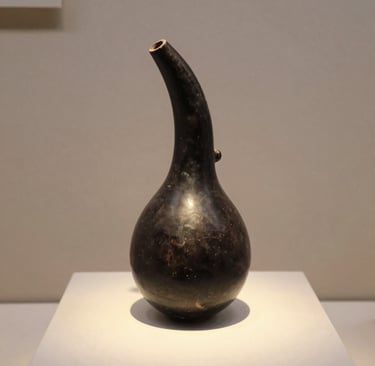
Calabash calligraphy represents a fusion of craftsmanship and symbolic communication. The engraving and decoration of gourds—used traditionally for storage, rituals, and domestic purposes—carry patterns that often encode social meaning, proverbs, and identity markers.
Similarly, henna art functions as a living archive of cultural knowledge. Applied during weddings, festivals, and rites of passage, henna designs communicate status, beauty, spirituality, and belonging. These practices are transmitted across generations, primarily through women, preserving techniques and meanings that might otherwise be lost.
Together, these art forms challenge the dominance of written and institutional records by demonstrating that knowledge can be stored, transmitted, and interpreted visually and performatively.
Expanding the Definition of Art
Arewa art, calabash calligraphy, and henna disrupt narrow definitions of what constitutes “fine art.” They exist at the intersection of art, craft, design, and daily life. Unlike gallery-based works, these forms are functional, wearable, and often ephemeral.
Henna fades. Calabash objects are used and eventually replaced. Yet, their impermanence does not diminish their artistic value; rather, it emphasizes process, participation, and lived experience. This challenges Western-centric hierarchies that privilege permanence and commodification, offering instead a more holistic understanding of art as life-integrated practice.
Gendered Spaces and Invisible Contributions
Henna art, in particular, highlights the role of women as custodians of cultural expression. In many Northern Nigerian communities, women are central to the creation and transmission of henna designs, yet their contributions are often underrepresented in formal art histories.
Recognizing henna as a legitimate art form elevates these voices and corrects historical imbalances. It brings attention to the informal, domestic, and communal spaces where significant artistic production occurs, broadening the scope of who is considered an artist.
Contemporary Relevance and Global Dialogue
These art forms are increasingly influencing contemporary African art and design. Artists and designers are reinterpreting Arewa motifs, calabash engravings, and henna patterns in modern media—painting, textiles, digital art, and installation.
This reinterpretation creates a bridge between tradition and modernity, allowing local aesthetics to participate in global conversations. It also strengthens cultural pride, particularly among younger generations seeking to reconnect with their heritage in innovative ways.
Conclusion
Arewa art, calabash calligraphy, and henna are not peripheral traditions; they are central to understanding the depth and diversity of Nigerian and African art. They preserve cultural memory, expand artistic definitions, and ensure inclusive representation across regions and genders.
By integrating these forms into the broader narrative, we move closer to a more accurate and complete understanding of African art—one that values not only what is displayed in galleries, but also what is lived, worn, and practiced within communities.